The Zouk Dance Floor Is a Tiny Village

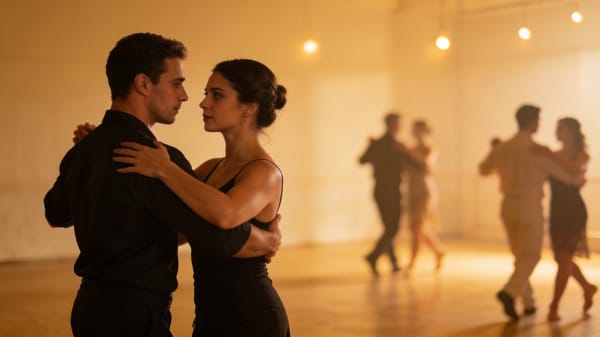
I think one of the biggest misunderstandings in social dancing is that we treat it like a private experience.
We pay for a ticket, we show up, we dance, we go home. Simple.
But most Zouk scenes are not big anonymous clubs. They’re closer to a small village. And in a village, everything you do has a longer shadow.
People notice who is always dancing and who is always sitting.
People notice who welcomes newcomers and who only dances with the same two friends.
People notice who says no kindly and who says no like a door slam.
And yes—people notice who says no to someone and then immediately says yes to someone else.
I’m not saying this to guilt anybody. I’m saying it because it’s real. And if you want to understand why some scenes feel warm and some scenes feel cold, it’s not always about talent. It’s often about these tiny repeated choices.
Now, let me be clear: it is absolutely okay to say no.
We have bodies. We have boundaries. We have different energy levels. We have different histories. We have different nervous systems. We have different needs.
If we remove the right to say no, we destroy safety.
But if we remove awareness, we destroy community.
And the reason I care about awareness is because I’ve seen what one dance can do.
One kind yes can be the difference between someone staying or leaving the scene.
One respectful dance can be the difference between someone thinking “I belong here” or “this is not for me.”
That sounds dramatic, but if you’ve ever been a beginner—or if you’ve ever been the person sitting and overthinking—you know it’s not dramatic. It’s Tuesday.
The village mindset changes the question from:
“Am I allowed to do what I want?”
to:
“What kind of culture am I feeding when I do what I want?”
Because in a small scene, your behavior is not isolated. It’s contagious.
If the strongest dancers only dance with the strongest dancers, that becomes the norm.
If teachers look like they’re “performing” all night, that becomes the model.
If people treat dances like status transactions, the whole room becomes tense.
So what do I do with this, practically?
I try to structure my night.
At the beginning of the social—when the tone is being set—I try to be more open. More rotating. More welcoming.
In the middle, I listen to my battery. I don’t pretend. I take breaks. I choose based on energy.
And at the end, when I’ve already contributed, I give myself permission to be more selective.
That rhythm helps me balance two truths at the same time:
Truth one: I’m not obligated to dance with anyone.
Truth two: my choices have consequences for other people, especially in a small scene.
And there’s another village skill that matters even more than dancing:
Not watching and doing nothing.
Because sometimes the best thing you can do for your community is not “give another dance.” It’s noticing someone struggling and doing something human.
A conversation. An introduction. A check-in. Or even telling a trusted friend or organizer: “Hey, I think this person is having a hard time—can we look out for them?”
That’s village behavior.