The Dance of Presence: How Partner Dance Teaches Us to Live in the Now
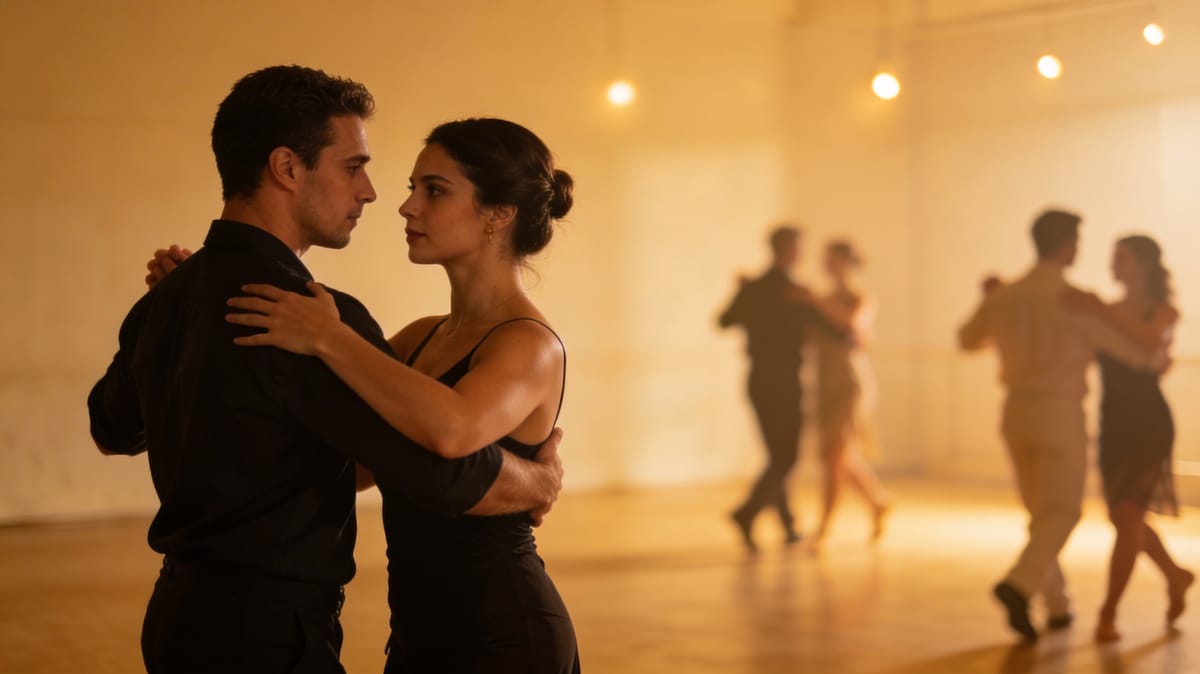
Have you ever finished a dance and couldn't remember the specific moves you did, yet felt completely fulfilled? That's not a failure of memory—it's the signature of true presence. In Brazilian Zouk and partner dancing, we stumble upon one of life's most elusive treasures: the ability to exist fully in the present moment.
When Two Become One
Neuroscientists studying jazz musicians discovered something remarkable: when musicians play together in deep synchronicity, their brains begin to mirror each other in a phenomenon called "neural coupling." The same thing happens on the dance floor. When you're truly connected with your partner, your bodies engage in a real-time feedback loop happening in split seconds—adjusting tension, breathing together, preparing for the next movement without conscious thought.
This isn't metaphorical. Your nervous systems are literally communicating and synchronizing. One dancer described it as feeling like their partner was "inside their mind," predicting movements before they happened. Another said after such a dance, they needed to sit down and process what just occurred—the experience was that profound.
The Two Selves
There's a concept from sports psychology about "self one" and "self two." Self one is your critical, analytical mind—the voice that judges, compares, and worries about whether you're doing things correctly. Self two is the part of you that feels, flows, and connects to embodied experience. It's where creativity and connection live.
Most of us spend our entire lives dominated by self one, both on and off the dance floor. We're thinking about the next move, worrying if our partner likes dancing with us, judging our technique, or comparing ourselves to others. But the magical dances—the ones that regulate your nervous system and leave you feeling complete—happen when self two takes over.
The practice is simple but not easy: observe when self one starts screaming, acknowledge it, and gently guide your attention back to sensation. How does your partner's hand feel? What does the music make your body want to do? Where is the weight in your feet?
The Trap of Expectation
We carry expectations into every dance. We expect our partner to have certain skills, to move in certain ways, to give us a certain experience. When those expectations aren't met, frustration creeps in and steals our joy. One teacher described how obsession with technique ruined his dancing mood, while another noticed that expectations of how she "should" dance compared to last week prevented her from enjoying the present dance.
The antidote? "Expect nothing and accept everything." This doesn't mean lowering your standards or settling for mediocrity. It means accepting reality as it is, then working with what's actually in front of you rather than fighting against what you wish were true. Your partner has poor rhythm? Accept that's how they move, adjust, and see what becomes possible. The music isn't your preferred style? Stop wishing it were different and discover what this music offers.
When you dance to feel joy, happiness equals reality minus expectations. The more expectations you release, the more joy becomes available.
Dance as Moving Meditation
People don't often realize this, but when real dancing happens—when you're completely immersed in your body, in the space that is yours, in the experience of the present moment—you're meditating. Meditation is simply awareness. For thousands of years, people have worked to become fully aware, which shows both how difficult and how valuable it is.
Partner dancing offers a unique entry point to this awareness. You're training yourself to feel how your feet contact the floor, how your body moves through space, how another person's energy meets yours. You're practicing letting go of the future (what move comes next?) and the past (did I mess up that turn?). You're developing the capacity to simply be here, now, with this person, with this music.
The Permission to Connect
There's something almost miraculous about partner dance: it gives strangers permission to connect at a depth that would otherwise take years to develop. You can dance with someone you've never met and walk away feeling like you've known them for decades. How? Because you met them at the body level, below the level of words and social performance, in the space where humans simply are.
But this only happens when both people are present. When you're watching yourself dance from outside, worrying about what others think, or planning your next Instagram caption, you're not available for connection. The other person can feel it. Your body is there, but you're not home.
The practice of presence in dance trains you for presence in life. That conversation with a friend where you're actually listening instead of planning what you'll say next. That meal you taste fully instead of scrolling through your phone. That moment of joy you experience completely instead of immediately analyzing or photographing it.
Coming Home to Your Body
We live in an era of unprecedented disconnection from our bodies. We spend hours looking at screens, sitting still, living in our heads. Dance invites us back home. It says: you are not just a brain piloting a meat vehicle. You are a unified being, and your body holds wisdom your mind cannot access.
When you step onto the dance floor with the intention to be present—not to perform, not to impress, but simply to be—you're practicing one of the most important skills for a fulfilling life. You're training yourself to notice when you've left the present moment and to gently return. Again and again and again.
The dancer who can stay present through a simple basic step often has a more profound experience than the one doing complex moves while lost in their head. Because in the end, the moves don't matter nearly as much as the presence you bring to them.
So tonight, when you dance, try this: Let go of expectations. Silence self one. Feel the floor beneath your feet. Notice the warmth of your partner's hand. Listen not just to the music but to the conversation your bodies are having. Be here, now, in this unrepeatable moment.
That's not just good dancing. That's good living.