Flow in Brazilian Zouk Is a Trance, Not a Trick

I want to talk about flow, but I don’t want to talk about it like a hack.
Because I think that’s where people get stuck: we treat flow like a button. Like if we just learn the correct technique, the correct pattern, the correct mindset—boom—“connected dance.”
And yes, there are skills that make flow more likely. But for me, flow is closer to a trance than a trick. It’s something that happens when conditions align. And the moment I try to force it, I usually scare it away.
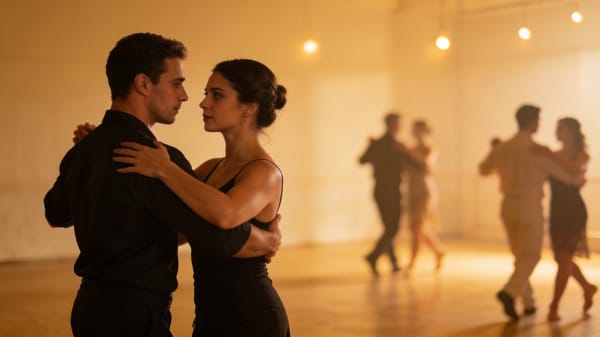
You know the feeling I mean. That dance where it feels like your partner is inside your mind. Like they’re predicting you and you’re predicting them. Like there’s this silent agreement happening faster than thought. Some people call it neural coupling, some call it being “one,” some call it magic.
Whatever we call it—it’s real enough to make people addicted.
And that addiction is dangerous.
Because once I’ve had that dance, I walk into the next social like: “Okay. Give me that again.” And now I’m hunting. I’m scanning. I’m testing. I’m disappointed before the song is over because it’s not that.
And I don’t notice that I just turned my own joy into a performance metric.
I also think flow is emotional regulation in disguise. I’ve experienced this, and I’ve heard it described: those dances can regulate your nervous system so deeply that you leave the floor and you need to sit down—not because you’re bored, but because your body is integrating something.
Which is why I believe we crave it on certain nights more than others.
Sometimes I don’t even want “a good dance.”
Sometimes I want a dance that makes my nervous system finally exhale.
Here’s what I’ve learned: flow seems to require three things, and none of them are flashy.
First: music. Not the “best song,” but the song that both bodies agree with. The song that hits the same place in both people. The song that becomes a shared language.
Second: attention. Real attention. The kind where I’m not thinking about what I’m doing next, I’m listening to what is happening now. Touch, tension, timing, breath, micro-adjustments. The dance is a conversation, not a speech.
Third: trust. And I don’t just mean trust like “this person won’t drop me.” I mean the deeper trust where my body doesn’t assign scary meaning to every detail.
Where a head close to my face is just a head close to my face. Where closeness is just closeness. Where the dance doesn’t have to mean anything beyond the dance.
Because the moment my mind starts narrating—“they want something,” “I’m sending the wrong signal,” “people are watching,” “I have to look good”—my body tightens. And when my body tightens, flow becomes impossible.
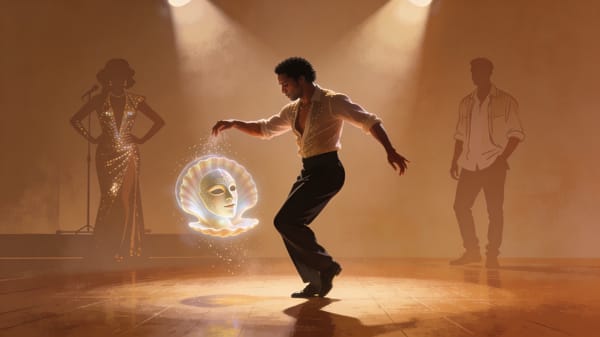
The part of me that kills flow is my inner commentator.
The critical voice. The manager. The one trying to keep everything correct.
And the part of me that invites flow is the one that can play. The one that can respond. The one that can let go. The one that can be in “self two” instead of “self one,” if you like that language.
So how do I invite flow without chasing it?
I simplify.
I stop trying to show vocabulary. I stop trying to “do something.” I give myself permission to do less and listen more.
I treat the dance like weather: I can’t control it, but I can dress appropriately. I can adjust. I can meet what’s there.
And when it’s not happening, I don’t punish the night.
Sometimes I take a break. Sometimes I go outside. Sometimes I go home early. And I’ve learned a very honest metric: if I get to my bed and I feel relief, then leaving was the right decision.
Flow is not a demand I can make of the universe.
It’s a gift that shows up when I’m in the right relationship with the moment.
So I’m still learning. But I’m learning to prefer the dance I’m actually having over the dance I’m craving.
And ironically… that’s when flow visits again.