Dancing Your Truth: The Journey from Performance to Authenticity
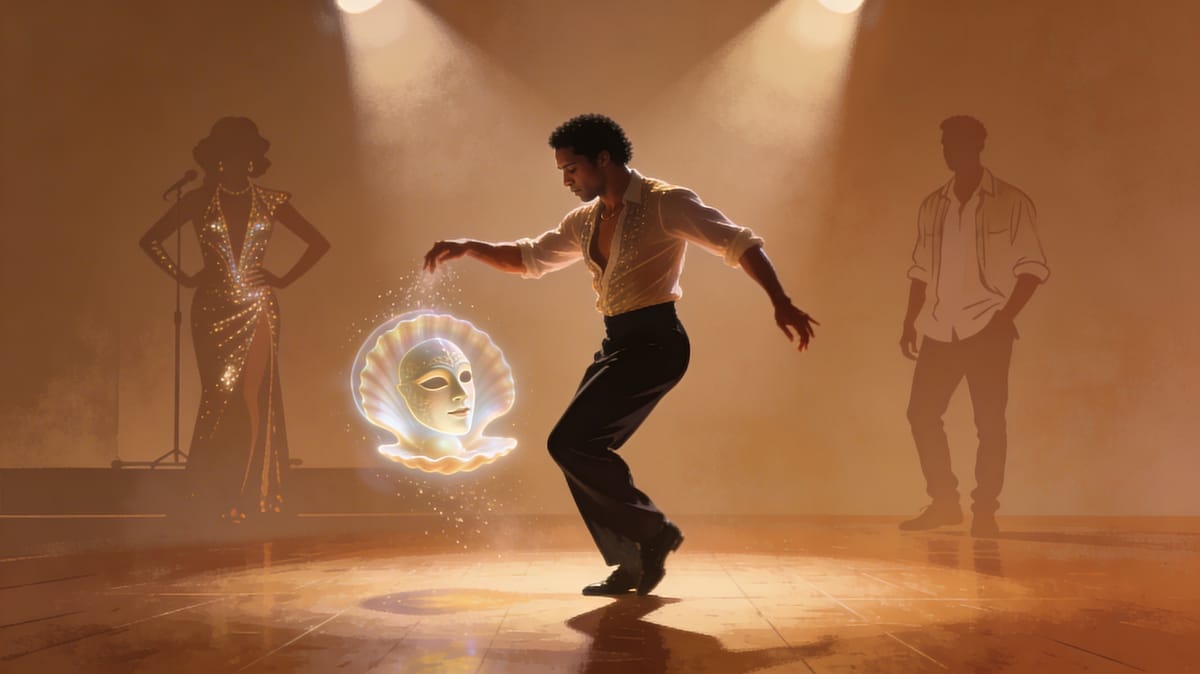
"I don't want people to see me as a teacher. I want them to see me as a human being." This confession from a professional dancer cuts to the heart of one of the most painful tensions in both dance and life: the gap between who we really are and who we think we should be.
The Weight of Roles
We all wear masks. Student, teacher, beginner, professional, leader, follower. These roles come with expectations—spoken and unspoken rules about how we should behave, what we should be able to do, how we should show up. And slowly, without noticing, the role can become heavier than the person wearing it.
One teacher described dancing with students while managing an injury. Her body was screaming to stop, but the role of "teacher" overrode her personal boundaries. She thought: "If I stop this dance, they'll think I don't want to dance with them. Someone is recording. This person is excited. I can't disappoint them." The person in pain wanted to stop. The teacher kept going.
This is what happens when roles become more important than the humans inhabiting them. We sacrifice our truth—our needs, our boundaries, our authentic experience—on the altar of others' expectations.
The Comparison Trap
Social media has turned life into a highlight reel, and dance is no exception. We scroll through feeds seeing people executing perfect spagats, dancing at exotic festivals, posting their newest demo. And quietly, insidiously, a voice whispers: "You should be doing that too."
One professional dancer who started at age 22 without ballet training spent years doubting her value. She watched dancers who'd trained since childhood and thought: "I don't move like that. I don't have that technique. How can I belong here?" The comparison was constant, exhausting, and joy-stealing.
But here's what she eventually realized: she was comparing her social dancing to others' performance training. She was comparing her unique path to someone else's completely different journey. She was asking herself to produce results from work she hadn't done while ignoring the results from work she had done.
"I was training my footwork, my lines, my connection, my musicality—but I was comparing myself to people training spagats and tricks. Of course I looked different. We were on different paths."
From Comparison to Aligned Inspiration
The act of noticing differences isn't the problem. Observation is neutral: "Their eyes are blue, mine are brown. They can do a split, I cannot." The suffering enters when we attach judgment to observation: "Blue eyes are better. Spagats mean you're a real dancer. I'm not good enough."
The shift from toxic comparison to healthy inspiration happens when you add one question: "Does this align with who I am and where I want to go?"
You see someone with incredible flexibility. Before spiraling into "I should work on that," pause and ask: "Do I actually want that? Does it serve my dancing? Does it bring me joy?" If yes, get curious about their process. If no, let it be beautiful in them while you cultivate what's beautiful in you.
Not everything that's impressive is meant for you. And that's not just okay—it's essential. Because trying to be everything means being nothing. Trying to dance everyone's dance means never discovering your own.
The Permission to Be Yourself
One dancer received feedback that she didn't smile enough while dancing. Looking around, she noticed most dancers smiled constantly. So she tried. And it felt fake, forced, disconnected from her truth. Slowly, she gave herself permission to smile only when it was genuine—when joy naturally arose, not when she thought she should perform joy.
That small act of self-permission rippled outward. When you stop performing who you think you should be, you create space for who you actually are. And paradoxically, that's when people truly connect with you. Because everyone can feel the difference between authentic presence and performed personality.
Think about your favorite dancers to watch. What draws you to them isn't technical perfection—it's that they're fully themselves. They've found their unique expression and they're committed to it. The ones trying to be everyone else? They disappear into the crowd, no matter how many tricks they can execute.
Don't Lose Who You Are for Who You Want to Become
"Don't lose the pleasure of the dancer that you are to the dancer that you want to become. Because the dancer you will become is related to the dancer you are right now."
This wisdom holds a profound truth: the journey matters more than the destination, and you can't skip steps. The beginner struggling with basics while smiling and present with their partner? They're already dancing beautifully, even if they can't execute complex moves. The advanced dancer doing impressive combinations while disconnected from themselves and their partner? They're not dancing—they're performing gymnastics with music.
Your growth emerges from who you are now, not from rejecting yourself in favor of some future fantasy version. The soil that grows your future dancing is giving appreciation for what you have and how you are in this right moment.
The Question That Changes Everything
When you feel the pull of comparison, when someone's dancing makes you question your own worth, when you're tempted to chase every new trend or technique, pause and ask:
"Is this mine?"
Not "Is this good?" or "Is this popular?" or "Will this make people like me?" But: "Is this mine? Does this align with my essence, my joy, my path?"
Some things will be a clear yes. You'll feel excitement that sustains beyond the initial rush. That's aligned inspiration—it's calling you forward. Chase that.
Some things will be a clear no. You can appreciate them in others without needing to possess them yourself. Let those go with gratitude that they exist in the world, just not in your dance.
And some things you won't know yet. Put them on the shelf. Check back in two weeks or two months. If the fire is still there, it's yours. If it's faded, it was just a passing fancy.
The Courage of Authenticity
Make no mistake: being yourself in a world of expectations requires courage. It's easier to follow the template, wear the costume, dance the dance everyone expects. But ease isn't the same as fulfillment.
Every time you honor your truth—saying no when you mean no, dancing how you feel rather than how you think you should look, choosing your path over someone else's—you reclaim a piece of your authentic self. And that's not just good for your dancing.
That's good for your life.
Because the question facing us on the dance floor is the same question facing us everywhere: Will you live as an authentic expression of who you are? Or will you spend your one precious life performing a role someone else wrote?
The dance floor is just practice for the bigger stage.